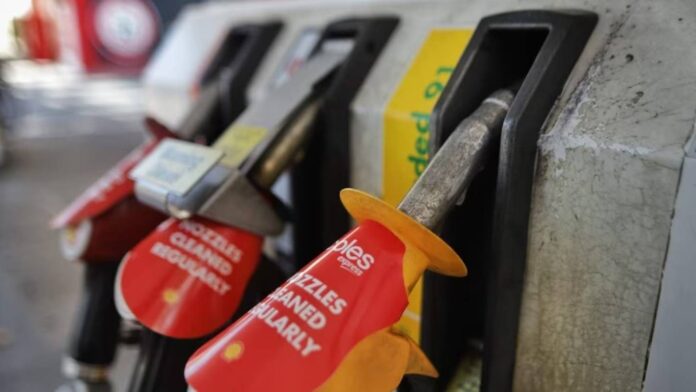
Petrol prices across Wyndham and greater Melbourne are climbing again, but this is no routine jump in the fuel cycle.
What drivers are seeing at the bowser is the local fallout from a much larger geopolitical shock, as war in the Middle East tears through oil markets, jolts supply routes and pushes fresh pressure onto already stretched household budgets.
Brent crude has surged well past the US$100 a barrel mark, briefly pushing towards US$120, as traders price in the risk of a deeper and longer global supply disruption.
At the centre of the turmoil is the Strait of Hormuz, the narrow shipping corridor between Iran and Oman that carries about one-fifth of global oil shipments.
When that artery is threatened, fuel markets react fast, and the latest escalation has done exactly that, sending crude sharply higher and reviving fears that the cost of petrol, diesel, freight and aviation fuel could remain elevated well beyond the first shock of the conflict.
For motorists in Melbourne’s west, the global crisis is already becoming painfully local. Service-station prices across Melbourne have been rising rapidly, with some outlets now pushing unleaded well beyond the $2 a litre mark.
In Wyndham Vale, recent listings have shown regular unleaded around 205.9 to 219.9 cents per litre, a level that would have looked extreme only weeks ago.
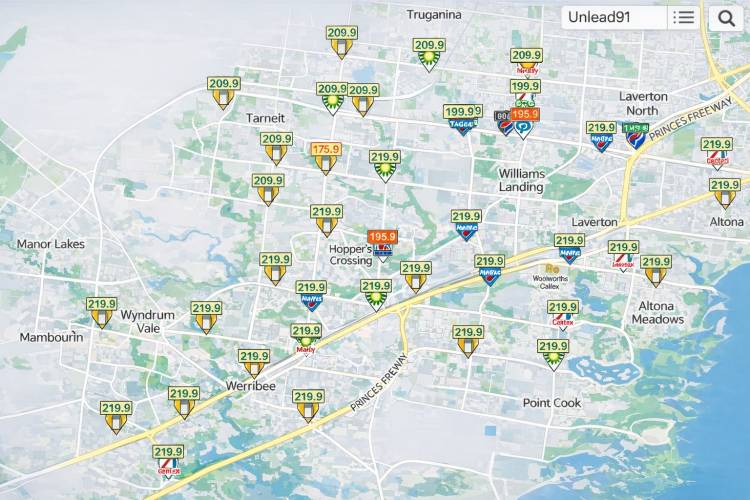
Even allowing for the city’s normal fuel-price cycle, the speed of the increase has sharpened concern that international oil volatility is now flowing through to consumers with unusual force.
The ACCC has acknowledged that concern, saying it is keeping a close eye on the petrol market as crude and refined fuel benchmarks climb amid the conflict.
The watchdog noted that average retail petrol prices across Australia’s five largest cities were already 180.4 cents per litre in the December quarter of 2025, while more than 190 regional locations it monitors averaged 180.6 cents per litre.
Those figures now risk becoming a lower baseline rather than a recent high point if the international shock persists.
Economists have warned the latest oil shock could add as much as 40 cents a litre to petrol prices in coming weeks if the conflict continues to intensify.
That would turn an already expensive tank of fuel into another serious cost-of-living blow for commuters, tradies, delivery operators and small businesses that depend on road transport every day.
In suburbs where long car trips are often unavoidable, the effect lands quickly and unevenly, punishing households that have the least flexibility to absorb it.
Australia’s vulnerability to this kind of event is not new, but it is being exposed again in unusually stark fashion.
The country imports about 90 per cent of its liquid fuels, including petrol, diesel and jet fuel, which means major international disruptions are rarely contained overseas.
When shipping lanes tighten, refineries slow, or oil exporters cut supply, Australian consumers don’t watch from the sidelines.
They pay for it directly, and often within days.
Canberra has sought to calm fears of an immediate physical shortage, but without pretending the risk is insignificant. Federal Energy Minister Chris Bowen said Australia currently holds about 36 days of petrol, 34 days of diesel and 32 days of jet fuel.
Those figures put the country above its minimum stockholding obligations, yet they also underline a deeper strategic weakness. Australia is still working towards the International Energy Agency benchmark of 90 days of net imports, a goal that remains well beyond the nation’s present position.
That is why this is not simply a petrol-price story. It is also an inflation story, a freight story and a household-confidence story. Dearer oil feeds into transport costs, supermarket logistics, delivery networks and air travel, spreading well beyond the forecourt.
Australia’s sharemarket has already reacted badly to the inflation risk tied to oil’s surge, reflecting the broader fear that another energy shock could slow spending and weigh on economic confidence just as many families are still contending with high repayments and stubborn living costs.
There is also mounting scrutiny over how quickly some retail prices have jumped.
Consumer advocates and motoring groups have questioned whether parts of the retail market are moving faster than wholesale costs alone would justify, given that fuel already in local tanks may have been bought before the most recent spike in global prices.
That does not change the fact that the war is the underlying cause, but it does raise an uncomfortable question for retailers: how much of the pain reflects genuine cost pass-through, and how much reflects the opportunity to move early while public anxiety is running high.
For Wyndham, the practical meaning is brutally simple. A conflict on the far side of the world is making the weekly shop more expensive, the drive to work dearer, and the margins tighter for businesses that rely on fuel every single day.
Global Market Analysis
Brent crude futures surged more than 15% on Monday to trade above US$100 a barrel, after earlier soaring as much as 29% as production cuts from key Middle Eastern producers rattled global energy markets following disruptions in the Strait of Hormuz.
The earlier spike marked the biggest one-day gain since April 2020 and pushed prices to their highest level since June 2022, building on last week’s 27 per cent rally.
Supply pressures intensified as Kuwait began cutting output at its oil fields and refineries, while the United Arab Emirates said it was managing offshore production to deal with storage constraints, with onshore operations continuing as usual.
In Iraq, production from its three main southern oilfields has fallen by 70% to 1.3 million barrels per day, down from 4.3 million before the conflict, according to industry sources, while Qatar’s LNG output cuts last week added further strain to already tightening global supply.
Meanwhile, Iran has appointed the son of the late Ayatollah Ali Khamenei as the country’s new Supreme Leader.
If the war drags on, or if the Strait of Hormuz remains badly disrupted, Melbourne’s west is likely to feel more of that pressure before it feels any relief. The bowser has once again become a geopolitical scoreboard, and right now the numbers are moving in the wrong direction.